Outdoor Safety
Safety First. Every Trail. Every Time.
Outdoor adventures don't fail because of bad intentions — they fail because of overlooked details, poor planning, and delayed decision-making. Trailhead Ops exists to close that gap.
Why Safety Is the Foundation
Every piece of content Trailhead Ops produces starts with one question: what does someone need to know before they go? Whether you're day-hiking a local trail, running a multi-day overland route, or taking your K9 into backcountry terrain, the principles are the same — preparation, situational awareness, and the ability to make good decisions when conditions change.
This page is your starting point. Four core safety disciplines, built from real-world field experience, not theory.
Topic 01
Outdoor Safety Tips for Hikers
Trail-specific risk awareness and preparation for every skill level.
Most hiking incidents are preventable. The gap between a great day on the trail and an emergency situation is almost always filled by one thing: preparation. That means knowing your route before you leave, understanding the terrain and weather window, carrying the Ten Essentials, and telling someone where you're going and when to expect you back.
On the trail, situational awareness is your most important tool. Watch for changes in weather, monitor your pace and energy levels, and know your turnaround time before you start. Trailhead Ops emphasizes early decision-making — the best time to turn back is before conditions force you to.
- File a trip plan with a trusted contact before every outing
- Carry navigation tools — map, compass, and a charged GPS device
- Know the Ten Essentials and carry them on every hike
- Set a hard turnaround time and honor it regardless of conditions
- Dress in layers and always pack rain gear, even on clear days
Topic 02
Wilderness Preparedness & Survival
Field-tested principles for remote environments when things go wrong.
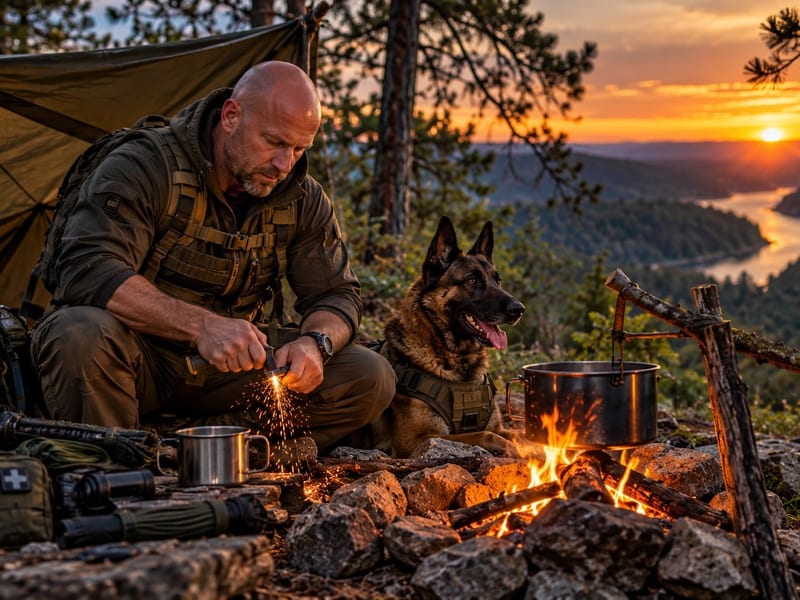
Wilderness survival isn't about dramatic rescues — it's about the decisions you make in the first hour after something goes wrong. The STOP principle (Stop, Think, Observe, Plan) is the foundation. Panic costs energy and leads to poor choices. Staying calm and methodical is what keeps people alive.
The survival priorities are shelter, signaling, water, and fire — in that order. Exposure kills faster than dehydration. Know how to build emergency shelter with what you're carrying, how to signal rescuers effectively, and how to source and purify water in the field. Practice these skills before you need them.
- Apply STOP immediately — Stop, Think, Observe, Plan
- Prioritize shelter before water — exposure is the fastest killer
- Carry a signal mirror, whistle, and bright-colored emergency tarp
- Know at least two methods to purify water in the field
- Practice fire-starting with multiple methods before your trip
Topic 03
Overlanding Safety & Preparedness
Off-grid travel, vehicle readiness, and route planning for overland adventurers.
Overlanding puts you far from help with a vehicle that can break down, get stuck, or sustain damage in terrain that doesn't forgive mistakes. Vehicle readiness is non-negotiable — tires, recovery gear, fluids, and communications equipment need to be checked before every trip, not after you're already on the trail.
Route planning for overland travel goes beyond navigation. Know the road conditions, seasonal closures, water crossing depths, and the nearest point of rescue for every leg of your route. Carry a satellite communicator. Build in buffer days. And always have a bailout route planned before you need one.
- Inspect tires, fluids, recovery gear, and comms before every trip
- Carry a satellite communicator — cell service ends where the adventure starts
- Know your vehicle's ground clearance, approach, and departure angles
- Plan a bailout route for every leg of your overland route
- Travel with at least one other vehicle in remote terrain when possible

Topic 04
K9 Wilderness Safety
Guidance for handlers taking dogs into backcountry terrain.
Taking a dog into the backcountry adds a layer of responsibility that most handlers underestimate. Dogs can't tell you when they're overheating, dehydrated, or injured — you have to read the signs. Paw pad damage, heat exhaustion, and wildlife encounters are the most common K9 field emergencies, and all three are largely preventable with the right preparation.
Carry a K9-specific first aid kit, know how to check your dog's vitals in the field, and understand the signs of heat stress before they become critical. Leash discipline in wildlife corridors isn't just courtesy — it's a safety protocol. A dog that bolts after a deer in remote terrain can become a search-and-rescue operation.
- Carry a K9 first aid kit and know how to use it before you go
- Monitor paw pads on rocky or hot terrain — boots are not optional in extreme conditions
- Know the signs of heat exhaustion in dogs and act before they become critical
- Use leash discipline in wildlife corridors — a bolting dog is a K9 emergency
- Carry extra water specifically for your dog — at least 8 oz per hour of activity
Go Further. Go Prepared.
Watch Trailhead Ops field guides and wilderness preparedness videos on YouTube for in-depth coverage of every safety topic.